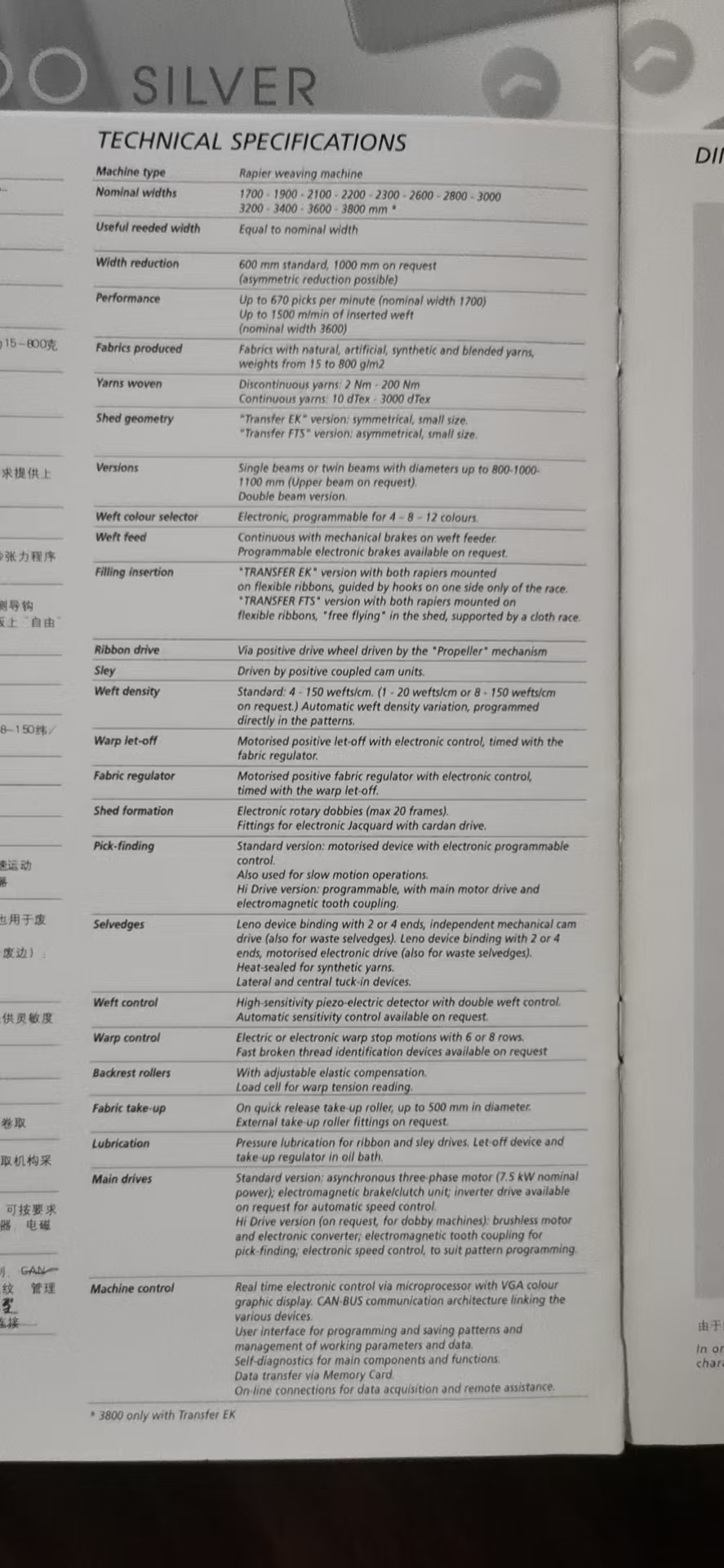
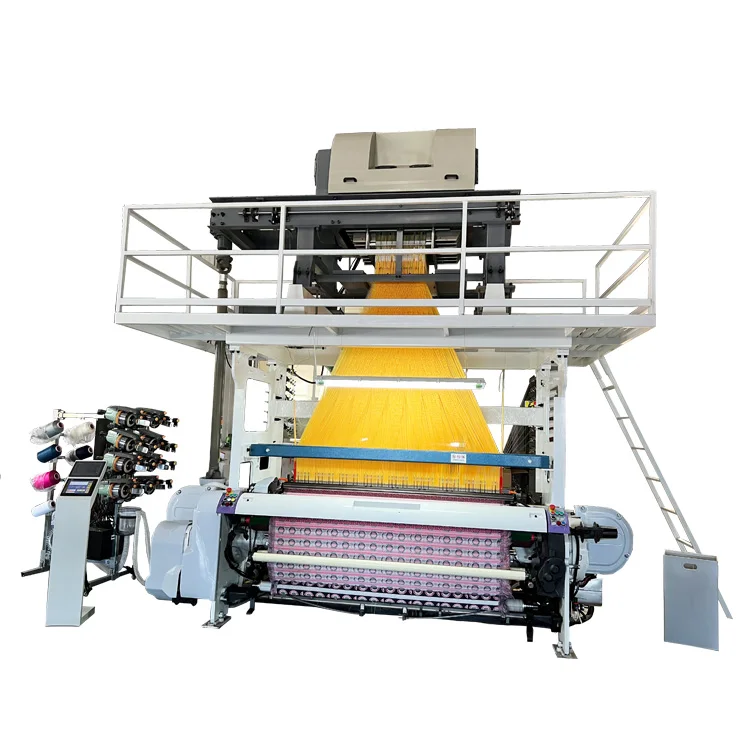
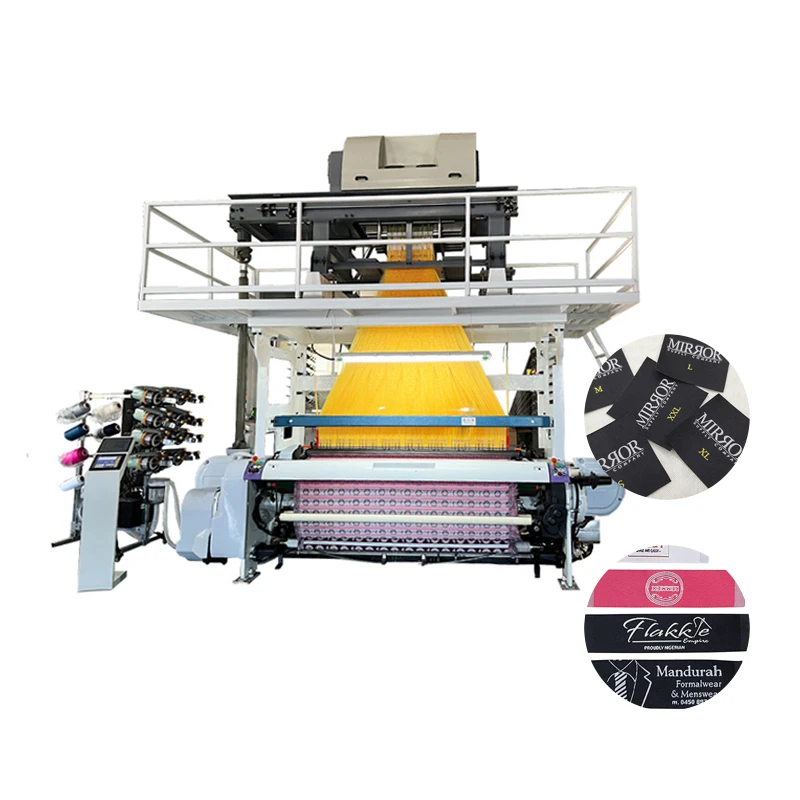
Weft feed: Continuous with mechanical brakes on weft feeder. Programmable electronic brakes available on request
Filling insertion:
TRANSFER EK version with both rapiers mounted on flexible ribbons, guided by hooks on one side only of the race
TRANSFER FTS version with both rapiers mounted on flexible ribbons, "free flying" in the shed, supported by a cloth race
Ribbon drive: Via positive drive wheel driven by the "Propeller" mechanism
Sley: Driven by positive coupled cam units
Weft density: Standard 4 - 150 wefts/cm. (1 - 20 wefts/cm or 8 - 150 wefts/cm on request) Automatic weft density variation, programmed directly in the patterns
Warp let-off: Motorised positive let-off with electronic control, timed with the fabric regulator
Fabric regulator: Motorised positive fabric regulator with electronic control, timed with the warp let-off
Shed formation:
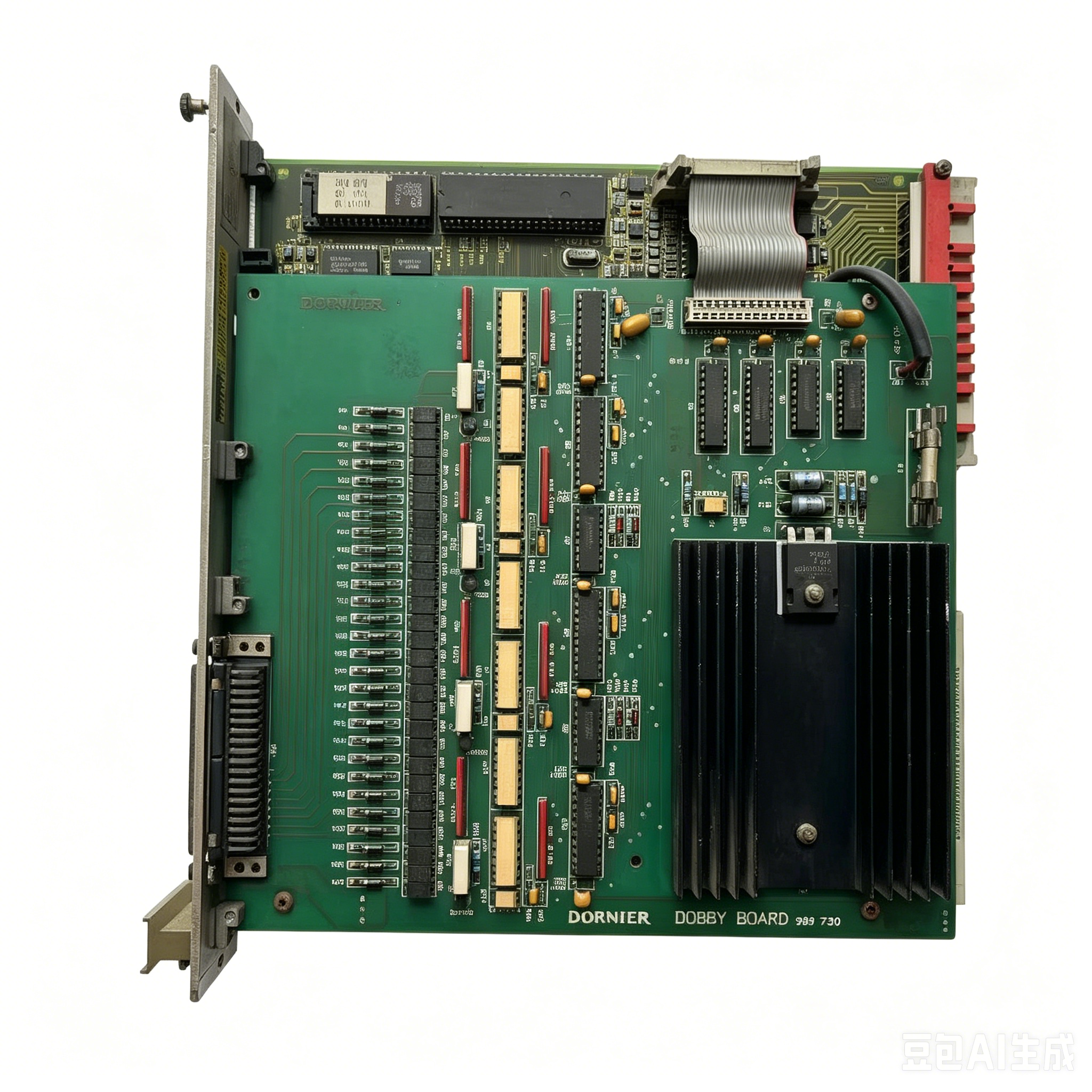
Electronic rotary dobbies (max 20 frames)
Fittings for electronic jacquard with cardan drive
Pick-finding:
Standard version: motorised device with electronic programmable control. Also used for slow motion operations
Hi Drive version: programmable, with main motor drive and electromagnetic tooth coupling
Selvedges: Leno device binding with 2 or 4 ends, independent mechanical cam drive (also for waste selvedges). Leno device binding with 2 or 4 ends, motorised electronic drive (also for waste selvedges). Heat-sealed for synthetic yarns. Lateral and central tuck-in devices
Weft control: High-sensitivity piezo-electric detector with double weft control. Automatic sensitivity control available on request
Warp control: Electric or electronic warp stop motions with 6 or 8 rows. Fast broken thread identification devices available on request
Backrest rollers: With adjustable elastic compensation. Load cell for warp tension reading
Fabric take-up: On quick release take-up roller, up to 500 mm in diameter. External take-up roller fittings on request
Lubrication: Pressure lubrication for ribbon and sley drives. Let-off device and take-up regulator in oil bath
Main drives:
Standard version: asynchronous three phase motor (7.5 kW nominal power); electromagnetic brake/clutch unit; inverter drive available on request for automatic speed control
Hi Drive version (on request, for dobby machines): brushless motor and electronic converter; electromagnetic tooth coupling for pick-finding; electronic speed control, to suit pattern programming
Machine control:
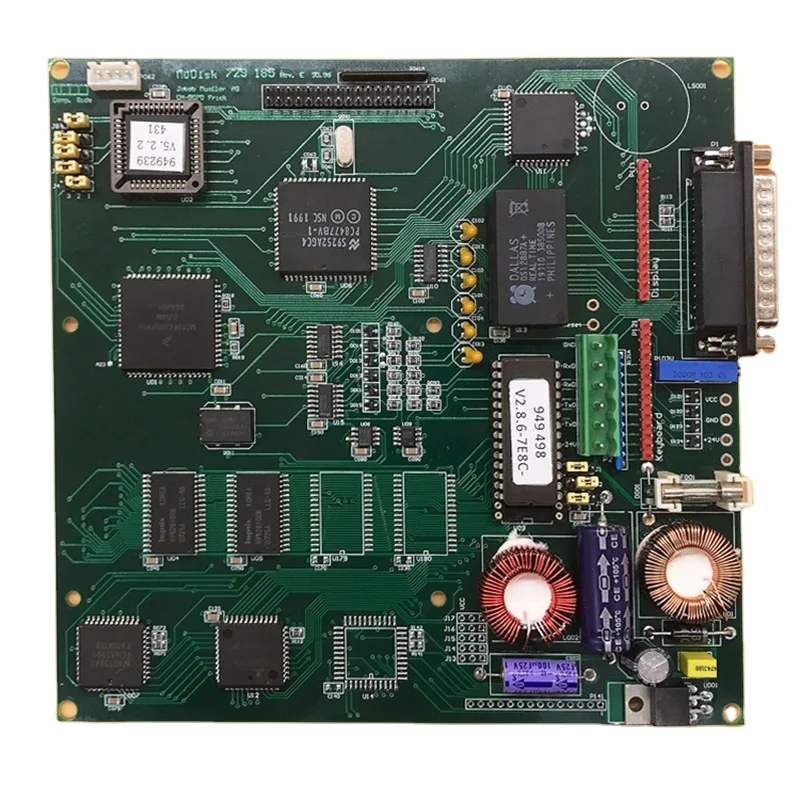
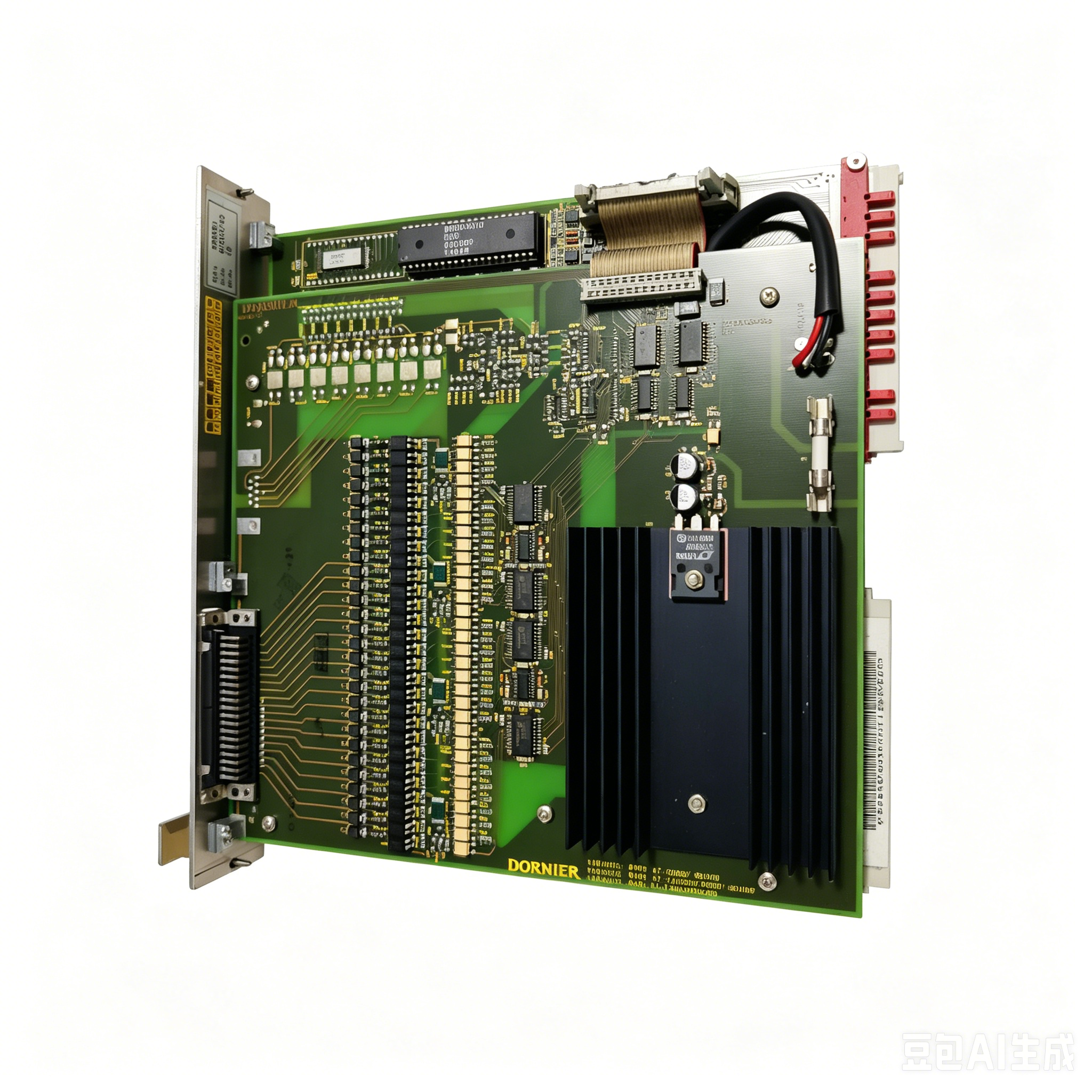
Real time electronic control via microprocessor with VGA colour graphic display. CAN-BUS communication architecture linking the various devices
User interface for programming and saving patterns and management of working parameters and data
Self-diagnostics for main components and functions
Data transfer via Memory Card
On-line connections for data acquisition and remote assistance
 EN
EN